 Here’s the scenario. You write an email in Outlook and send it to your best friend. Your friend then opens the email in her Gmail account.
Where is the email stored? In 4 places.
- Your Outlook (email management software) saves a copy in Sent Items.
- Your server (Cox, CenturyLink, Verizon, etc.) saves a copy in webmail Sent Items.
- Your friend’s server saves a copy in her webmail Inbox.
- Your friend’s Gmail (email management software) saves a copy in Inbox.
You can delete both of your copies if you want to. Delete from Outlook. Log into webmail and delete from webmail.
You can not delete your friend’s copies.
That’s why you always want to THINK before you hit SEND!

 How you communicate online has an impact! Readers do pick up clues and insights from your style and tone.
 Smartphone use isn’t formally recognized as an addiction – yet. But we have all caught ourselves in addictive behavior. Not long ago, I headed to my bank which is a mere 3 miles from my house. About halfway there I realized I had forgotten my phone. I started to turn around to go get it! REALLY?!?! I used to make cross-country trips without a phone. Now I can’t drive 3 miles to the bank? In town on a sunny day?

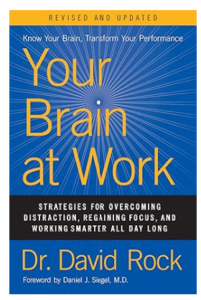 Very interesting book! I highly recommend it for anyone who has stressful days, difficult situations in their life or who wants to make a change in the world.
 “As we move further into 2026, the term “digital hygiene” has evolved. It is no longer just about changing your passwords or clearing your browser cookies. In this hyper-connected era, where AI-curated feeds and constant notifications are the norm, digital hygiene has become a vital practice for protecting our cognitive focus and emotional well-being.
 “The advanced and highly interconnected world, businesses are under increasing scrutiny. Customers, investors, and stakeholders are no longer satisfied with just the products or services a company provides where they are paying attention to how companies conduct themselves.
 “A great keynote speech is a powerful and transformative experience. It can inspire a room, challenge a long-held belief, and leave an audience buzzing with a new sense of energy and purpose. But in today’s digital world, that powerful conversation doesn’t have to end when the applause fades. Your social media channels are your “virtual stage,” a place to continue the dialogue, to deepen your connection with your audience, and to build a lasting community around your core message.”
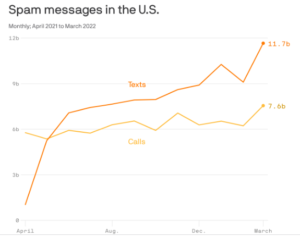 Yes, you are getting hit with more spam emails and calls — and now spam texts — than at any point in the history of these devices. These messages are frequently dangerous! They often try to steal your data, identity and/or money — and the crooks are getting better and better.
 “Companies cannot rely only on manual processes to stay competitive in today’s digital world. Business software applications have become essential tools that help organizations work faster, smarter, and more efficiently. From managing customers to analyzing data, these applications are transforming modern companies’ operations.